
Bottom Funnel
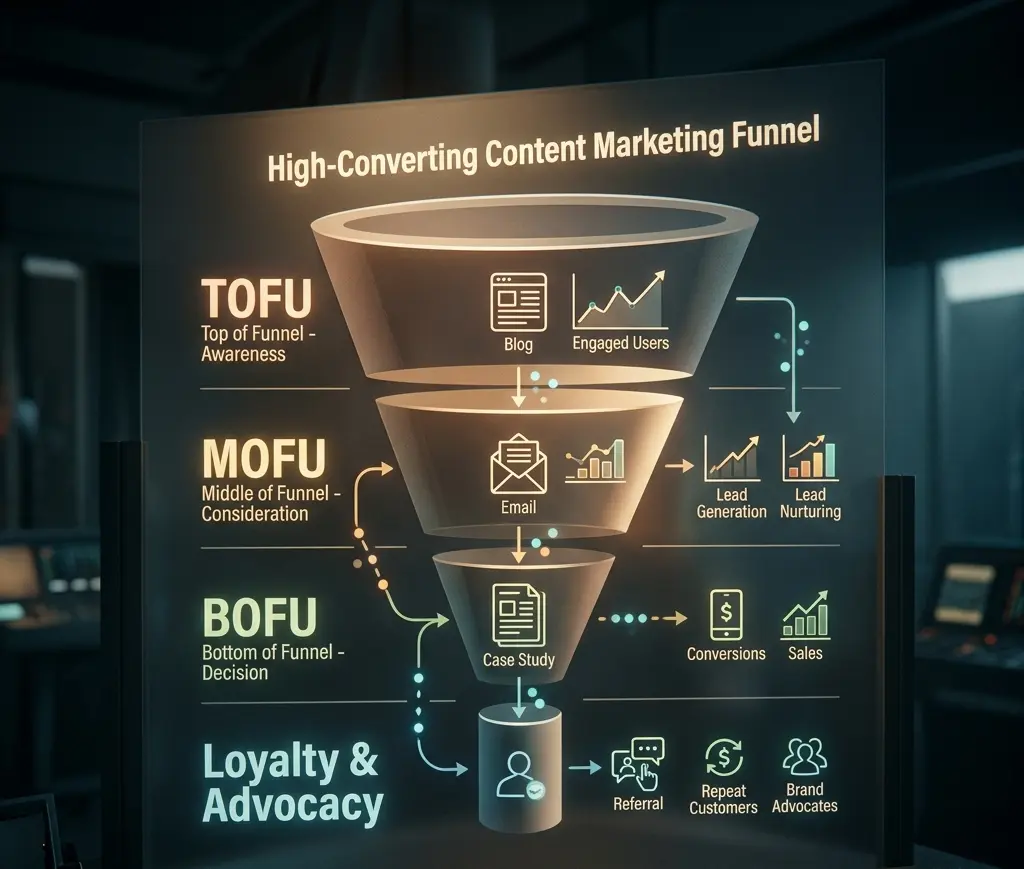
In marketing, not every person who discovers a brand is ready to make a purchase. Some are still learning about their options, while others are already comparing products or services and are close to taking action. Bottom-of-the-funnel marketing focuses on this final stage of the customer journey, where potential customers are more likely to convert. In this blog, The Leeway Media, the best digital marketing agency in Kerala, explains bottom-of-the-funnel marketing, its key goals, the common BOFU tactics and content businesses can use, and the important metrics to track. If you want to understand how businesses can turn high-intent prospects into customers and make their marketing efforts more conversion-focused, this blog is a useful place to start. Bottom-of-the-Funnel Marketing Bottom-of-the-funnel marketing refers to marketing activities aimed at potential customers who are at the final stage of the buying journey. By this point, they have generally become aware of their need, explored possible solutions, and developed an interest in particular products or services. They may now be comparing brands, evaluating prices and features, looking for customer reviews, or seeking additional information before making a decision. The bottom of the funnel (BOFU) is therefore focused primarily on conversion rather than broad awareness. The content and messaging used at this stage should address the specific questions or concerns that may still be preventing a prospect from taking action. For example, a person searching for a particular software product may have already compared several options and reached the product pages of a few providers. A detailed product demonstration, pricing information, customer case study, free trial, or consultation can provide the information needed to move that person closer to a purchase. The approach can vary depending on the business and its sales cycle. For an e-commerce company, the desired action may be an immediate purchase. For a service-based business, it could be an enquiry, consultation booking, or quotation request. In B2B marketing, where purchasing decisions can involve multiple stakeholders and longer evaluation periods, BOFU activities may support prospects through several interactions before the sale is completed. The key is to match the content and call to action with the prospect’s level of intent. Instead of simply telling them what a business offers, bottom-of-the-funnel marketing should help them understand why the offering may be suitable for their specific requirements and what they need to do next. Key Goals of the Bottom of the Funnel The bottom of the funnel focuses on prospects who are closer to making a purchasing decision. At this stage, businesses generally concentrate on three key objectives: driving conversions, overcoming hesitation, and closing the deal. Drive Conversions One of the primary goals of bottom-of-the-funnel marketing is to turn high-intent prospects into customers or qualified leads. The desired conversion depends on the business model and campaign objective. It could be a completed purchase, consultation booking, quotation request, service enquiry, or registration. At this stage, content should clearly communicate the value of the offering and guide the prospect towards the intended action. Clear calls to action, relevant landing pages, straightforward forms, and useful product or service information can help reduce friction during the conversion process. Overcome Hesitation A prospect may be interested in a product or service but still have concerns that prevent them from making a decision. These concerns could involve price, quality, features, reliability, suitability, or expected results. Bottom-of-the-funnel content can address these concerns by providing detailed information, answering frequently asked questions, demonstrating how the product or service works, and presenting evidence from existing customers. Providing relevant information at this stage can help prospects evaluate the offering more confidently. Close the Deal At the bottom of the funnel, prospects may already have narrowed down their options and are evaluating which one to choose. Marketing and sales activities can work together at this point to provide the information or assistance needed to complete the decision. Depending on the business, this could involve a product demonstration, personalised consultation, quotation, comparison information, or a relevant offer. In businesses with longer sales cycles, particularly B2B companies, the final stage may involve several interactions between the prospect and the sales team before the purchase is completed. Common BOFU Tactics and Content Businesses can use different types of BOFU content and tactics to address the needs of prospects who are close to conversion. The appropriate approach depends on the product, audience, sales cycle, and conversion goal. Product Demos and Free Trials Product demonstrations give potential customers an opportunity to understand how a product or service works before making a purchase. A demonstration can be conducted through a live session, recorded video, or personalised presentation. Free trials can serve a similar purpose by allowing prospects to experience a product before committing to a paid plan. This approach is particularly common for software and subscription-based products, where customers can evaluate the product through actual use. Case Studies and Testimonials Case studies and testimonials can provide social proof to prospects who are evaluating a purchase. A case study generally describes a customer’s problem or requirement, the solution provided by the business, and the resulting outcome. Testimonials provide customer feedback or experiences that can help potential buyers understand how others have experienced the product or service. For service-based businesses, this type of content can be particularly useful because it provides examples of how the business has addressed real customer requirements. Pricing and Feature Comparisons Pricing and feature information can be especially important when prospects are comparing different options before making a purchase. They may want to know what each plan includes, how much it costs, and which option is appropriate for their requirements. Businesses can use clear pricing pages, product comparisons, or feature comparison tables to make this information easier to evaluate. Providing accurate and transparent information can reduce uncertainty and help prospects make a more informed decision. Targeted Retargeting Ads Retargeting ads are used to reconnect with people who have previously interacted with a business’s digital presence. For example, someone who has visited a product page without completing a purchase may