The leeway media

social media marketing

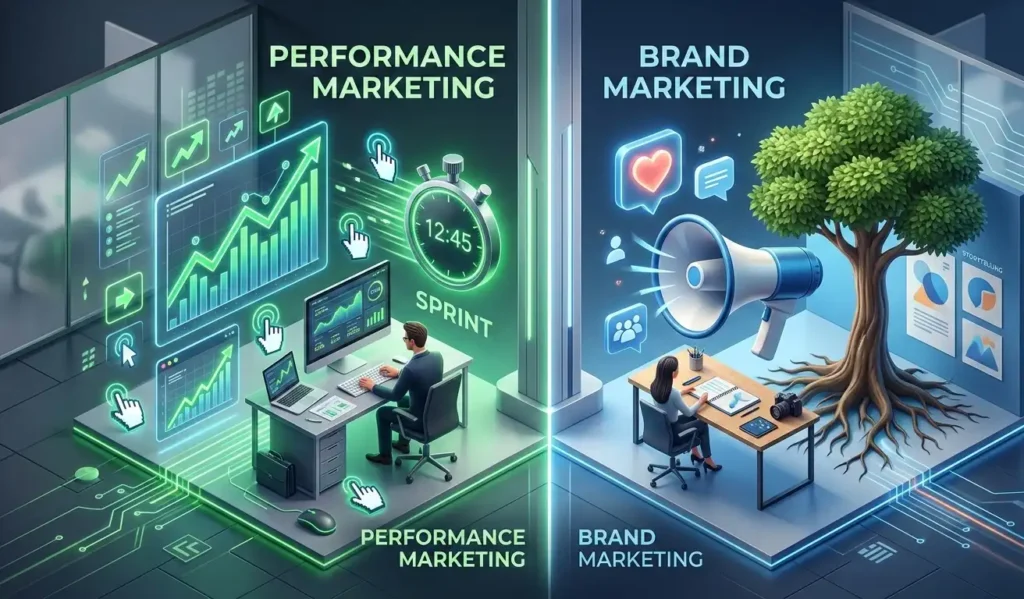
performance-marketing-vs-brand-marketing-strategy

Performance Marketing vs Brand Marketing

Performance Marketing vs. Brand Marketing: Which One Scales Your Business in 2026 In the rapidly changing digital world of today, organisations can no longer rely on guessing to expand. The debate around performance marketing vs brand marketing is becoming more significant than ever as we step into 2026. Should you concentrate on ROI-driven, quantifiable marketing that produces leads right away? Or spend money developing a long-term brand that generates recognition, trust, and steady demand? The answer isn’t always clear-cut, and the technique you choose can have a direct impact on how quickly and how far your organization can grow. With changing algorithms, increased ad prices, and more informed consumers, brands require a balanced and data-driven approach. That’s where The Leeway Media’s experience comes into play. As a trusted digital marketing agency in Kerala, The Leeway Media integrates performance-driven precision with strong brand storytelling to assist businesses expand effectively and sustainably. In this blog, we’ll explain the fundamental differences between performance marketing and brand marketing, look at what works best in 2026, and help you decide which approach can truly scale your business. What is Performance Marketing? (The “Sprint”) Performance marketing is a results-oriented digital approach in which companies pay for quantifiable, targeted actions instead of merely visibility. Consider it the “sprint” of your marketing strategy, quick, targeted, and intended to have an immediate impact. In performance marketing, every campaign operates around clear, identifiable outcomes. Tangible measures like clicks, leads, purchases, and app installs are used to gauge success. Brands spend money on marketing that directly increases conversions and revenue rather than just purchasing ad exposure. This technique often incorporates channels such as paid search ads, social media advertising, affiliate marketing, and programmatic campaigns, all of which are continuously optimised using data. Real-time tracking enables marketers to quickly modify budgets, creatives, and targeting in order to maximise ROI. For companies seeking immediate traction, quick customer acquisition, and a certain return on investment, performance marketing is perfect since it is marketing based on quantifiable outcomes (clicks, leads, sales, app installs). Even while it produces effects right away, it functions best when combined with a more comprehensive long-term plan. Key Channels in Performance Marketing Platforms that provide measurable, conversion-focused outcomes are ideal for performance marketing. The main avenues for quantifiable growth are listed below: 1) Google Search Ads Users who are actively looking for particular goods or services are the focus of Google Search Ads. These high-intent advertisements are effective at attracting ready-to-buy consumers since they show up at the top of search results. Why it works: Targets intent-driven keywords Delivers quick, measurable results Optimizes around clicks, leads, and sales This channel is frequently the foundation of performance initiatives since it links companies with users at the optimal moment of need. 2) Meta Retargeting Retargeting on Meta-owned platforms (such as Facebook and Instagram) concentrates on people who have already engaged with your company, such as by visiting your website, looking at a product, or adding products to your basket. Why it works: Warms up cold traffic Reduces cart abandonment Improves conversion rates By reminding potential customers about what they showed interest in, retargeting significantly boosts ROI. 3) Affiliate Marketing Affiliate marketing partners your brand with publishers, influencers, or websites that promote your product in exchange for a commission on successful conversions. Why it works: You pay only for performance (sales or leads) Expands reach without heavy upfront ad spend Leverages third-party trust and credibility This model minimizes risk while maximizing scalable growth. Pros of Performance Marketing Performance marketing is often called the “growth accelerator” of digital strategy — and for good reason. Here are its biggest advantages: 1) Instant Gratification Unlike traditional brand efforts, which require time to gain traction, performance marketing produces quick, obvious results. You can see clicks, leads, and even sales practically immediately after a campaign goes live. This makes it ideal for: Product launches Seasonal offers Flash sales Rapid customer acquisition The speed of execution and feedback provides that powerful sense of instant progress. 2) Clear ROI Tracking Data is the foundation of performance marketing. Every click, lead, sale, or app installation may be monitored and analysed. With detailed analytics dashboards, businesses can: Measure cost per click (CPC) Calculate cost per acquisition (CPA) Track return on ad spend (ROAS) Optimize campaigns in real time Everything is measurable, so decision-making becomes more strategic and less reliant on assumptions. 3) Highly Scalable Once you’ve identified a profitable campaign, growing is simple. You can boost your budget, broaden your target audience, experiment with new creatives, or enter new markets while staying within performance targets. Performance marketing is a potent growth strategy for both new and existing brands because of its scalability. When the numbers are right, growth can be increased swiftly and efficiently. Cons of Performance Marketing Performance marketing offers quantifiable outcomes and quickness, but there are drawbacks that companies need to be aware of. 1) Costs Can Spike as Competition Grows Bidding mechanisms are used by performance marketing platforms. As more competitors target the same demographic or keywords, cost-per-click (CPC) and acquisition expenses might skyrocket. What this means: Highly competitive industries face rising ad spend Profit margins can shrink over time Continuous optimization is required to stay efficient Without strategic management, campaigns can quickly become expensive and less profitable. 2) Once You Stop Paying, the Traffic Stops Performance marketing is often compared to renting attention. The moment you pause your ads, the traffic, leads, and sales usually drop immediately. Unlike brand marketing, which builds long-term recall and organic demand, performance campaigns depend on ongoing budget allocation. If spending stops: Website traffic declines Lead flow reduces Sales momentum slows Performance marketing is therefore effective for quick wins but less long-lasting if not backed by sustained brand-building initiatives. What is Brand Marketing? (The “Marathon”) If performance marketing is the sprint, brand marketing is the marathon. Instead of concentrating on quick conversions, it aims to develop long-term recognition, trust, and loyalty. Rather than enquiring, “How many clicks did we receive today? Brand marketing

Performance Marketing vs Brand Marketing Read More »

instagram mistakes to avoid

Instagram Mistakes to Avoid in 2026

Instagram is evolving quicker than ever, and what worked yesterday may damage your reach in 2026. From algorithm updates to smarter audiences and AI-driven content, even minor errors can lose you visibility, engagement, and growth. In this blog, we’ll break down the most common Instagram errors to avoid in 2026—and how to remain ahead of the curve with techniques that actually work. Insights from a reputable social media marketing agency in Kerala can help you transform Instagram into a potent growth engine rather than a lost opportunity, whether you’re a brand, entrepreneur, or influencer. 10 Instagram Mistake to Avoid in 2026 Let’s look at 10 Instagram mistakes to avoid in 2026 to help you stay relevant, increase interaction, and develop a larger presence on the platform without relying on outdated techniques. Mistake #1: Posting Without a Content Strategy Posting on Instagram without a clear content plan is one of the most common mistakes brands make. Random posts with no defined purpose, audience focus, or content theme can lead to uneven engagement and weak company identification. Instagram will prioritise purposeful, value-driven content in 2026, so each post should have a wider goal, such as raising business exposure, generating leads, or establishing communities. A well-planned content strategy promotes consistency, clarity, and measurable growth rather than wasting effort. Mistake #2: Ignoring Reels and Short-Form Video Ignoring Reels and short-form video in 2026 is equivalent to ignoring Instagram’s main stage. Brands that solely use static postings lose out on enormous reach and discoverability because the platform places a strong emphasis on video content. You can connect more quickly, show off your individuality, and adjust to shorter attention spans with the use of reels. Skipping short-form video risks slipping behind competitors who use engaging, bite-sized content to attract, educate, and convert their target audience. Mistake #3: Focusing Only on Followers, Not Engagement Chasing follower count over real connection is an expensive error in 2026. If your material isn’t getting likes, comments, shares, or saves, having a big audience doesn’t mean anything. Instagram’s algorithm now favours interaction above numbers, prioritising content that builds meaningful discussions and communities. Brands that prioritise interaction build trust, improve visibility, and increase conversions, whilst those preoccupied with follower development frequently struggle with low reach and poor performance. Mistake #4: Overusing Hashtags Without Research Using too many hashtags without sufficient research will hinder your Instagram performance rather than assist it. In 2026, using haphazard or unnecessary hashtags makes your content appear spammy and draws in the wrong kind of audience. Instead of increasing reach, they frequently decrease engagement and visibility. Relevance, specialised, and intent-focused strategic hashtag research helps your postings find people who are actually engaged in your material, improving interaction and fostering long-term growth. Mistake #5: Posting Inconsistently Inconsistent posting gives your audience and Instagram’s algorithm conflicting information. In 2026, inconsistent posting disrupts momentum, diminishes visibility, and makes it more difficult to gain followers’ confidence. Long breaks followed by unexpected bursts of content might confuse your viewers and reduce interest. A regular posting schedule increases reach, keeps your business at the forefront of consumers’ minds, and establishes a dependable content rhythm that fosters sustainable growth. Mistake #6: Not Using Analytics to Improve Content Ignoring Instagram analytics is a serious error that prevents brands from experiencing true growth. In 2026, data-driven judgements are more important than guesswork; without insights on reach, engagement, savings, and audience behaviour, it’s hard to know what genuinely works. A professional social media management company in Kerala, like The Leeway Media, always emphasises analytics to refine content strategies, improve performance, and maximize ROI. Brands can produce more intelligent content, adjust more quickly, and stay ahead of evolving Instagram trends by regularly monitoring and evaluating outcomes. Mistake #7: Using Low-Quality Visuals Using low-quality visuals can rapidly lower your brand’s trust on Instagram. In 2026, users anticipate clean, high-resolution images and videos that are captivating and scroll-stopping. Blurry photos, poor lighting, and inconsistent design decrease engagement and make content easy to ignore. Investing in high-quality images makes your business stand out, conveys professionalism, and makes a powerful first impression that entices customers to follow and engage. Mistake #8: Not Optimizing Bio & Highlights Not optimising your Instagram bio and highlights means missing out on the possibility to convert profile visitors into followers or customers. In 2026, your bio serves as a brief pitch, outlining your qualifications, identity, and reasons for being followed. Unorganised or out-of-date highlights can confuse users and undermine trust. A well-optimized bio and intelligently picked highlights boost discoverability, reinforce brand identification, and direct visitors to take action. Mistake #9: Avoiding Paid Promotions Entirely Avoiding all sponsored ads may limit your Instagram development in 2026. With increased competition and decreasing organic reach, relying solely on free visibility makes it more difficult to reach new audiences. High-performing content can be amplified, the proper audiences can be targeted, and faster results can be achieved with strategic paid marketing. Instagram advertisements may enhance organic efforts, increase brand exposure, and speed up conversions without wasting money when used properly. Mistake #10: Not Working with a Social Media Marketing Agency for Guidance Trying to manage Instagram growth without competent advice is a common error brands make in 2026. Doing everything by yourself might result in missed chances and sluggish outcomes because algorithms, content trends, and marketing strategies are always changing. Partnering with a reliable social media marketing agency in Kerala, like The Leeway Media, gives you access to proven tactics, creative expertise, and data-driven insights. You can keep ahead of trends, steer clear of expensive blunders, and develop a powerful, results-driven Instagram presence with expert advice. Final Thoughts Avoiding these Instagram mistakes in 2026 is critical for brands seeking to remain current, visible, and competitive. As the platform continues to expand, success depends on strategic planning, consistent engagement, excellent content, and data-driven decisions. By modifying early and concentrating on what truly works, businesses can turn Instagram into an effective growth channel. Working with an expert digital marketing agency in Kerala can help

Instagram Mistakes to Avoid in 2026 Read More »

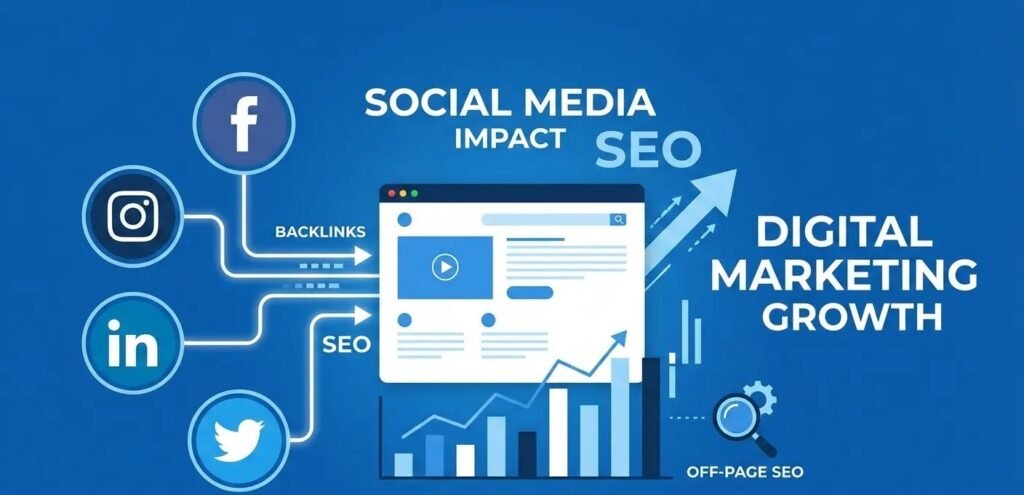
Illustration showing social media impact in off-page SEO through backlinks, traffic growth, and brand authority for a digital marketing agency

Social Media Impact in Off-Page SEO

Social Media Impact Off-Page SEO In today’s digital environment, social media does far more than just connect people; it also plays an important part in increasing your website’s visibility through Off-Page SEO. From boosting brand authority to increasing high-quality traffic and enhancing search rankings, the effect of social platforms on SEO is unquestionable. Businesses that effectively use social media can broaden their reach, foster trust, and promote long-term online success. At The Leeway Media, we help brands realize their full potential through targeted strategies and competent SEO services in Kerala, ensuring that your digital presence works smarter and performs better across all channels. How Does Social Media Impact Off-Page SEO? Social media has no direct impact on search engine rankings, but it dramatically improves Off-Page SEO via multiple important indirect signals. When your material is shared, liked, or discussed across many networks, it enhances visibility, credibility, and organic traffic—all of which search engines weigh when determining a site’s authority. Here’s how social media strengthens Off-Page SEO: Increases Content Reach: More shares mean more people discover your website, leading to higher referral traffic. Boosts Brand Awareness & Authority: Active engagement helps build trust and a strong online reputation. Attracts High-Quality Backlinks: Valuable content shared widely on social platforms often gets picked up by bloggers, journalists, and websites. Improves Indexing: Search engines can find and index content faster when it gains traction on social media. Enhances Engagement Signals: Comments, saves, and interactions create positive brand signals across the web. All things considered, social media serves as a potent amplifier for your website, enhancing its visibility and authority—two essential elements of effective off-page SEO. Does Social Media Presence Help Improve Search Engine Rankings? Social media presence is not a direct ranking criterion for search engines such as Google. However, it has a favorable impact on rankings in various indirect ways. A strong social presence boosts brand awareness, generates more traffic to your website, encourages content sharing, and raises the likelihood of obtaining backlinks—all of which lead to better overall search performance. How Can I Use Social Signals to Improve My SEO Rankings? While social signals like as shares, likes, and comments are not direct Google ranking considerations, they do improve the indirect signals that help your SEO performance. Here’s how to make good use of them: Share High-Quality, Valuable Content: Meaningful, engaging content gets shared more often, increasing visibility and referral traffic. Stay Active on Major Platforms: Regular posting keeps your brand relevant and encourages consistent engagement. Encourage User Interaction: Ask questions, run polls, and create interactive posts to boost comments and engagement rates. Use Strong CTAs to Drive Website Visits: Guide your social audience to your website or blog, increasing organic sessions and improving search signals. Collaborate With Influencers: Influencers can amplify your reach, attract new audiences, and increase chances of earning backlinks. Optimize Your Profiles (Social SEO): Use relevant keywords in your bio, descriptions, and hashtags to make your profiles more discoverable. Repurpose Content Across Platforms: Turning your blogs into reels, carousels, or infographics boosts visibility and encourages sharing. Final Thoughts Social media is becoming a crucial component of off-page SEO, assisting companies in reaching a wider audience, establishing credibility, and drawing in valuable traffic that promotes long-term search ranking success. When applied properly, it serves as an amplifier, enhancing the visibility of your material, promoting interaction, and raising the possibility of obtaining high-quality backlinks. At The Leeway Media, we help businesses capture the actual power of social platforms by providing specialized strategies and experienced SEO services in Thodupuzha, ensuring that your brand remains visible, relevant, and competitive in the digital space. By combining strong social media efforts with solid SEO tactics, you can build a strong online presence that promotes steady development. Instagram   Facebook 

Social Media Impact in Off-Page SEO Read More »

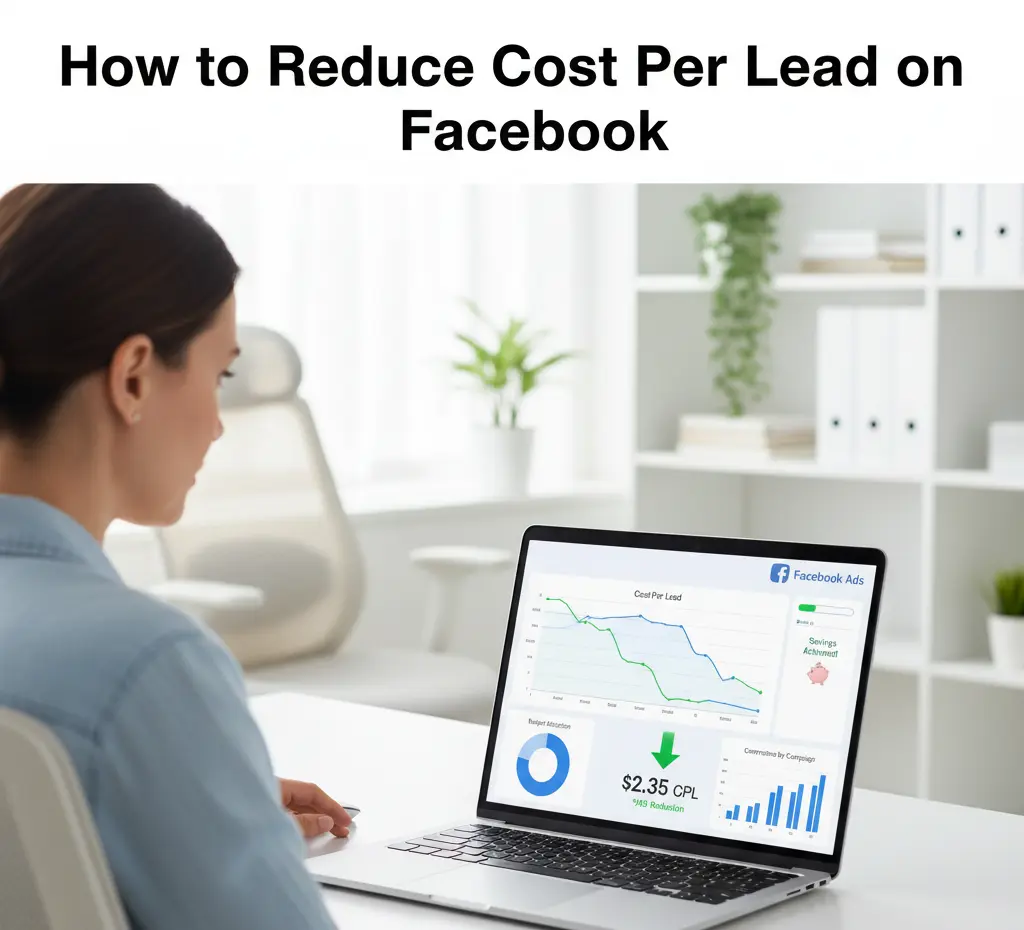
Digital marketer analyzing Facebook ad performance to learn how to reduce cost per lead on Facebook

How to Reduce Cost Per Lead on Facebook

This is How You Can Reduce Cost Per Lead on Facebook Ads   One of the best methods to produce high-quality leads is to run Facebook ad campaigns, but without a proper plan, expenses may easily get out of hand. Reducing your Cost Per Lead (CPL) is more than just cutting costs; it’s also about optimizing your ads, targeting smarter, and maximizing every click for higher conversions. In this blog, we’ll break down the best practices for getting more leads from your Facebook advertising campaigns while investing less money – allowing you to scale your business effectively and successfully. How Facebook Ads Work Facebook Ads use a clever, data-driven system that connects companies with the right people at the right time. When you establish an ad campaign on Facebook, you select a goal, such as raising brand awareness, generating leads, or driving sales. Then, Facebook’s algorithm shows your advertising to users who are most likely to do the targeted action using sophisticated targeting capabilities. These advertisements show seamlessly on Facebook, Instagram, Messenger, and the Audience Network, ensuring that your message reaches a large yet relevant audience. Facebook’s ad auction approach selects which advertisements are displayed based on bid amount, ad quality, and user relevancy, guaranteeing you get the most visibility for your money. Why Cost Per Lead is Rising If you’ve observed an increase in your Cost Per Lead (CPL), you’re not alone. Facebook ad campaigns and other digital marketing platforms are becoming more and more expensive due to a number of issues. Increased competition is a key factor; as more firms spend on paid advertisements, bidding prices rise. At the same time, ad fatigue can diminish engagement when consumers see the same creatives many times, resulting in reduced click-through rates and greater expenses. Furthermore, privacy updates and changes to tracking systems (such as Apple’s iOS updates) have hampered Facebook’s ability to optimize ads efficiently, making it more difficult for algorithms to identify high-intent users. Poor targeting, irrelevant creatives, and low landing page conversion rates can all contribute to an even higher CPL. Steps to Reduce Cost Per Lead Lowering your Cost Per Lead (CPL) involves more than just cutting expenses; it also entails improving the effectiveness of your initiatives. Here are the reliable steps to follow: Refine Your Target Audience: Target the users who have the highest conversion rates. Use Custom Audiences, Lookalike Audiences, and interest-based targeting to reduce irrelevant clicks. Optimize Ad Creatives: Test different ad formats, copy, visuals, and videos. High-quality, captivating content lowers your cost per acquisition (CPL) and boosts click-through rates. Improve Your Landing Page: Guarantee your landing page loads quickly, is mobile-friendly, and has a clear call-to-action. Increased conversion rates immediately reduce the cost per lead. Leverage Facebook Pixel & Conversion Tracking: Installing the Facebook Pixel will allow you to monitor conversions, improve campaigns, and retarget consumers who have already expressed interest in your business. Test and Scale Campaigns Gradually: Conduct A/B testing with various placements, creatives, and audiences. To optimize ROI, just scale successful campaigns. Use Retargeting Campaigns: Retarget website traffic, video viewers, or active social media users. Conversion rates for these warm audiences are frequently lower than those for cold visitors. Monitor and Adjust Bids & Budget: Review performance frequently and adjust your bidding approach. Automatic bidding or changing daily budgets can assist in keeping expenses under control while delivering goals. As the best social media marketing agency in Kerala, The Leeway Media provides top-notch social media marketing solutions designed to enhance every campaign, lower your Cost Per Lead, and create demonstrable growth—ensuring that each penny you spend delivers maximum ROI. Final Thought Reducing your cost per lead (CPL) on Facebook does not have to be difficult. By refining your targeting, modifying ad creatives, upgrading landing pages, and employing information-driven tactics, you can attract more good quality leads at less expensive.  Our specialty at The Leeway Media, the best digital marketing agency in Kerala, is developing Facebook advertising strategies that optimize return on investment while controlling your cost per lead. Our skilled staff collaborates closely with clients to develop strategies that create demonstrable outcomes, allowing your organization to grow efficiently and sustainably. Take control of your ad expenditure today and allow us to convert every Facebook click into a profitable lead.  Instagram   Facebook 

How to Reduce Cost Per Lead on Facebook Read More »

Scroll to Top