The leeway media

Author name: theleewaymedia.in

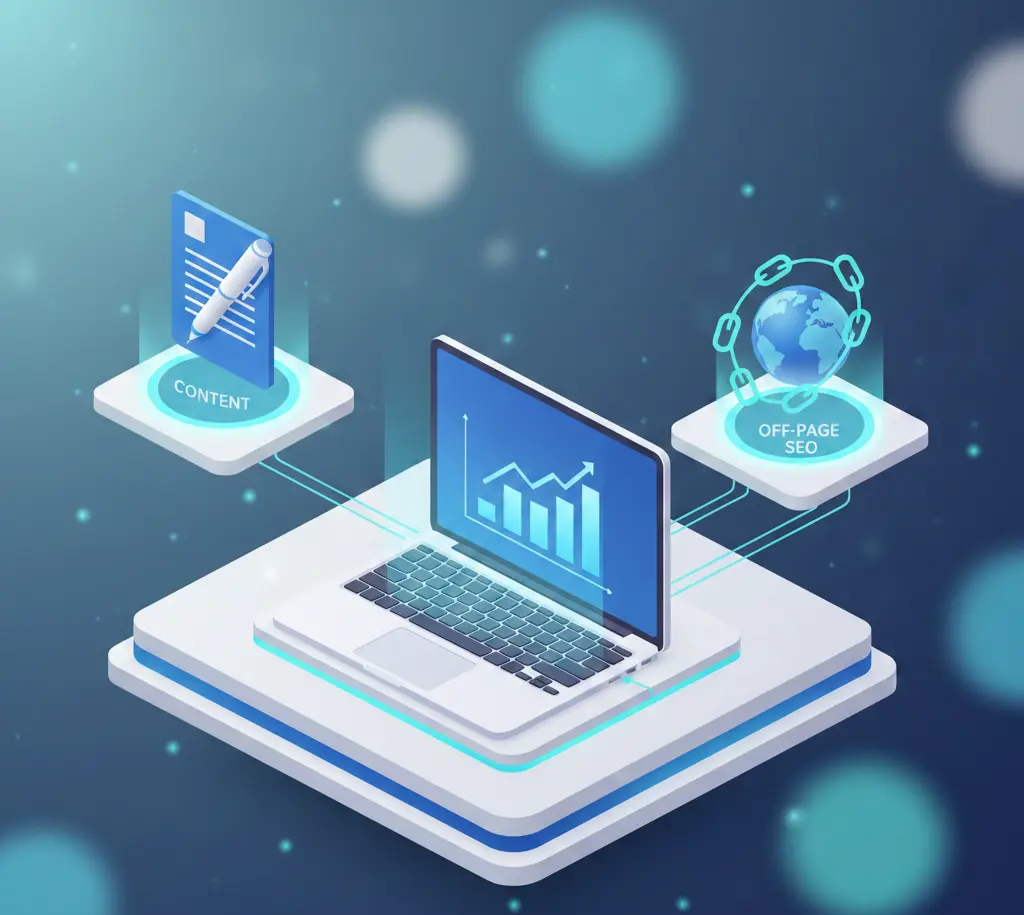
Content Marketing and Off-Page SEO blog hero image

Content Marketing and Off-Page SEO

Content Marketing and Off-Page SEO In today’s competitive digital market, simply having a website is not enough; brands must actively engage people and establish authority to stand out. This is where content marketing and off-page SEO come into play. High-quality, value-driven content attracts, educates, and converts people, while effective off-page SEO methods like link building, brand mentions, and digital public relations boost exposure, credibility, and search engine ranks. At The Leeway Media, these strategies come together effortlessly. With years of experience in the industry, Leeway knows how to create engaging content and use off-page SEO strategies that are in line with changing search engine algorithms. The Leeway Media, the best SEO company in Kerala, helps companies improve their online presence and achieve long-term digital success by emphasizing ethical business methods, sustainable growth, and quantifiable outcomes. How Does Content Marketing Contribute to Off-Page SEO? Content marketing is essential for improving off-page SEO since it helps organizations gain visibility, authority, and trust outside of their own website. Here’s how it makes a useful contribution: Earns High-Quality Backlinks: Blogs, manuals, case studies, and infographics that are thoroughly researched naturally draw backlinks from reputable websites. These backlinks tell search engines that your material is valuable and trustworthy, which immediately benefits off-page SEO. Increases Brand Mentions: Even when your brand name is referenced without a direct connection, it still helps with off-page SEO. Consistent content marketing increases your brand’s visibility across blogs, news portals, and forums, enhancing online credibility. Drives Social Signals: Engaging information is more likely to be shared on social networking sites. While social signals do not directly affect ranking, they do boost content visibility, which leads to increased traffic, remarks, and potential backlinks. Supports Guest Posting & Outreach: Strong content assets increase the effectiveness of guest posting and influencer outreach. Reputable websites are more inclined to publish and link back to your company when you offer high-quality material. Builds Authority & Trust: Your company establishes itself as an expert in the field by publishing insightful, useful, and regular content. This authority encourages other websites to use your material, which improves your off-page SEO profile. Improves Referral Traffic: Content published across external sites generates referral traffic from many sources. Search engines see this diverse traffic as a favorable trust signal. Enhances Digital PR Efforts: Content marketing encourages digital PR campaigns by offering newsworthy content such as studies, insights, or expert opinions that media outlets are likely to cite and link to. If you want to know more about off-page SEO, read our previous blog on off-page SEO. Why is Content Marketing Important for Link Building? One of the most effective and long-lasting strategies for creating high-quality backlinks is content marketing. Instead of chasing links, it focuses on generating value that draws them in. Content marketing is crucial for successful link building for the following reasons: Creates Link-Worthy Assets: Excellent blogs, comprehensive guides, case studies, infographics, and original research provide other websites with a compelling reason to refer back to you as a reliable source. Attracts Natural & Organic Backlinks: When content addresses problems or provides unique insights, other publishers cite it organically. These natural backlinks are significantly more valuable than forced or purchased ones. Improves Outreach Success: Content marketing strengthens outreach campaigns. When you share valuable content with bloggers, journalists, or website owners, they are more likely to accept guest posts or include your link. Builds Authority & Trust: Consistently publishing thoughtful content establishes your company as an industry leader. Trusted brands receive more backlinks because consumers prefer to link to credible sources. Supports Guest Posting: Guest posting is made easier and more successful with well-written, educational content. You can obtain contextual backlinks from relevant, high-quality domains by writing authoritative guest posts. Encourages Content Sharing: Social media and online communities are popular places to share interesting stuff. Increased visibility leads to more discovery, which frequently results in more backlinks. Strengthens Long-Term SEO Value: Unlike purchased links or short-term approaches, content-driven link development generates backlinks over time, resulting in long-term SEO benefits. Aligns with Google’s Guidelines: Search engines prefer links gained through valuable content over manipulative tactics. Content marketing ensures that your link development efforts are ethical and algorithm-safe. How to Create Shareable Content That Improves Off-Page SEO? Creating shareable content is critical for enhancing off-page SEO since it promotes backlinks, brand mentions, and increases online visibility. Here’s how you can make content that people want to share and search engines like: Know Your Audience Well: Understand your target audience’s interests, challenges, and search intent. Content that meets their specific needs is more likely to be shared across platforms. Offer Value Through Original Insights: Publish content that provides unique perspectives, expert opinions, or original data. High-value content naturally attracts shares and backlinks from credible websites. Write Attention-Grabbing Headlines: A compelling headline increases clicks and shares. Keep it clear, benefit-focused, and emotionally engaging without being misleading. Use Engaging Visuals: Include infographics, images, videos, or charts to make content more engaging. Visual elements enhance readability and boost shareability. Create Evergreen Content: Focus on topics that remain relevant over time, such as how-to guides, tips, and best practices. Evergreen content continues to earn links and shares long-term. Make Content Easy to Share: Add social sharing buttons and optimize your content for different platforms with share-friendly titles and descriptions. Promote Strategically: Actively distribute your content through social media, email campaigns, online communities, and outreach efforts to maximize reach. Encourage Influencer & Community Sharing: Collaborate with influencers, bloggers, and industry communities. Their shares and mentions increase credibility and off-page SEO strength. Keep It Simple & Actionable: Well-structured, easy-to-read content with clear takeaways is more likely to be saved, shared, and referenced by others. Update & Repurpose Content: Refresh existing content with new information and repurpose it into videos, reels, or carousel posts to extend its reach and sharing potential. The Role of Guest Blogging in Off-Page SEO Guest blogging helps businesses generate high-quality backlinks, enhance online authority, and reach new audiences, all of which contribute significantly to off-page

Content Marketing and Off-Page SEO Read More »

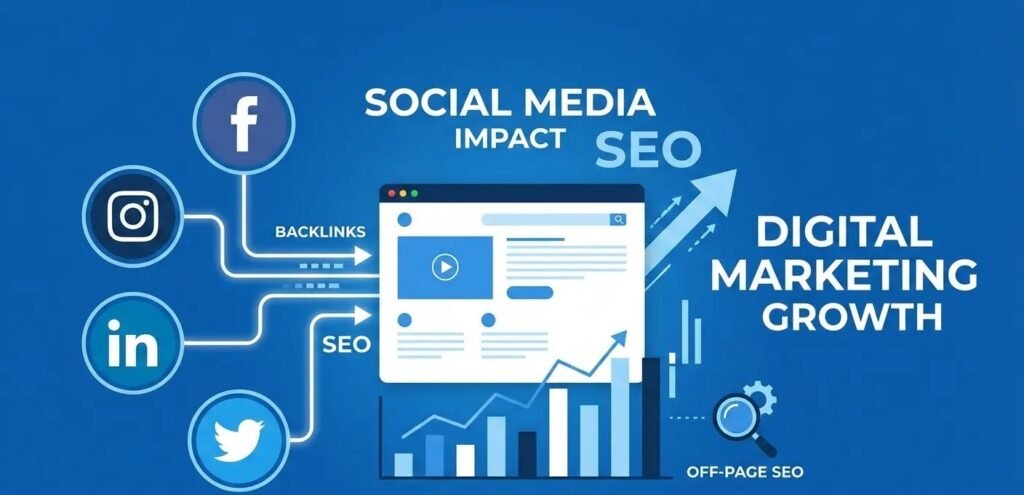
Illustration showing social media impact in off-page SEO through backlinks, traffic growth, and brand authority for a digital marketing agency

Social Media Impact in Off-Page SEO

Social Media Impact Off-Page SEO In today’s digital environment, social media does far more than just connect people; it also plays an important part in increasing your website’s visibility through Off-Page SEO. From boosting brand authority to increasing high-quality traffic and enhancing search rankings, the effect of social platforms on SEO is unquestionable. Businesses that effectively use social media can broaden their reach, foster trust, and promote long-term online success. At The Leeway Media, we help brands realize their full potential through targeted strategies and competent SEO services in Kerala, ensuring that your digital presence works smarter and performs better across all channels. How Does Social Media Impact Off-Page SEO? Social media has no direct impact on search engine rankings, but it dramatically improves Off-Page SEO via multiple important indirect signals. When your material is shared, liked, or discussed across many networks, it enhances visibility, credibility, and organic traffic—all of which search engines weigh when determining a site’s authority. Here’s how social media strengthens Off-Page SEO: Increases Content Reach: More shares mean more people discover your website, leading to higher referral traffic. Boosts Brand Awareness & Authority: Active engagement helps build trust and a strong online reputation. Attracts High-Quality Backlinks: Valuable content shared widely on social platforms often gets picked up by bloggers, journalists, and websites. Improves Indexing: Search engines can find and index content faster when it gains traction on social media. Enhances Engagement Signals: Comments, saves, and interactions create positive brand signals across the web. All things considered, social media serves as a potent amplifier for your website, enhancing its visibility and authority—two essential elements of effective off-page SEO. Does Social Media Presence Help Improve Search Engine Rankings? Social media presence is not a direct ranking criterion for search engines such as Google. However, it has a favorable impact on rankings in various indirect ways. A strong social presence boosts brand awareness, generates more traffic to your website, encourages content sharing, and raises the likelihood of obtaining backlinks—all of which lead to better overall search performance. How Can I Use Social Signals to Improve My SEO Rankings? While social signals like as shares, likes, and comments are not direct Google ranking considerations, they do improve the indirect signals that help your SEO performance. Here’s how to make good use of them: Share High-Quality, Valuable Content: Meaningful, engaging content gets shared more often, increasing visibility and referral traffic. Stay Active on Major Platforms: Regular posting keeps your brand relevant and encourages consistent engagement. Encourage User Interaction: Ask questions, run polls, and create interactive posts to boost comments and engagement rates. Use Strong CTAs to Drive Website Visits: Guide your social audience to your website or blog, increasing organic sessions and improving search signals. Collaborate With Influencers: Influencers can amplify your reach, attract new audiences, and increase chances of earning backlinks. Optimize Your Profiles (Social SEO): Use relevant keywords in your bio, descriptions, and hashtags to make your profiles more discoverable. Repurpose Content Across Platforms: Turning your blogs into reels, carousels, or infographics boosts visibility and encourages sharing. Final Thoughts Social media is becoming a crucial component of off-page SEO, assisting companies in reaching a wider audience, establishing credibility, and drawing in valuable traffic that promotes long-term search ranking success. When applied properly, it serves as an amplifier, enhancing the visibility of your material, promoting interaction, and raising the possibility of obtaining high-quality backlinks. At The Leeway Media, we help businesses capture the actual power of social platforms by providing specialized strategies and experienced SEO services in Thodupuzha, ensuring that your brand remains visible, relevant, and competitive in the digital space. By combining strong social media efforts with solid SEO tactics, you can build a strong online presence that promotes steady development. Instagram   Facebook 

Social Media Impact in Off-Page SEO Read More »

mastering-link-building-in-Off-Page-SEO-blog-hero-image

Link Building in Off-Page SEO

Link building & Off-Page SEO In the ever-changing world of digital marketing, having a strong online presence is no longer optional—it is required. While on-page SEO optimizes your website for search engines, off-page SEO and successful link-building tactics are critical in increasing your site’s authority, credibility, and search ranks. Building high-quality backlinks, guest posting, and social engagement are just a few techniques for increasing organic traffic and online visibility. Working with a reputable SEO agency in Kerala, such as The Leeway Media, can make all the difference for companies seeking a competitive edge. We assist organizations in enhancing their online presence, increasing traffic, and achieving sustained expansion with professional advice and customized off-page tactics. What is Link Building in Off-Page SEO? The process of obtaining hyperlinks from other websites to your own is known as link building in off-page SEO. As “votes of confidence” for your website, these links—often referred to as backlinks—tell search engines that your information is reliable, authoritative, and important. The process of obtaining hyperlinks from other websites to your own is known as link building in off-page SEO. As “votes of confidence” for your website, these links—often referred to as backlinks—tell search engines that your information is reliable, authoritative, and important. Here’s a more detailed breakdown: Purpose of Link Building Improves your website’s domain authority. Boosts search engine rankings. Drives referral traffic from other sites. Types of Links Natural links: Earned organically when other websites link to your content because it’s valuable. Manual outreach links: Obtained by contacting bloggers, influencers, or websites and requesting a backlink. Self-created links: Placed in directories, forums, or blog comments (less effective if overused). Best Practices in Off-Page SEO Link Building Focus on quality over quantity—a link from an authoritative site is more valuable than dozens from low-quality sites. Use relevant anchor text to describe the linked page accurately. Diversify your link sources (blogs, social media, news sites, directories). Avoid black-hat techniques, such as buying links, which can lead to penalties. Why are Backlinks Important for Off-Page SEO? Backlinks are one of the most important aspects of off-page SEO since they show search engines that your website is trustworthy, authoritative, and relevant. Each backlink acts like a “vote of confidence” from another site, suggesting that your material has worth. Strong backlink profiles frequently result in greater search engine rankings, more organic traffic, and improved domain authority. However, backlinks are only one aspect of off-page SEO. Social media presence also plays a crucial role. Posting your material on social media sites like Facebook, LinkedIn, Instagram, and Twitter can boost exposure and improve traffic. Social signals assist search engines in realizing that your material is popular and interesting, which indirectly aids your SEO efforts. For businesses looking to boost their online presence, integrating excellent link development with an active social media strategy is critical. To read a comprehensive overview on utilizing social media for off-page SEO, check out our upcoming blog. How Do Backlinks Affect Your Website’s Ranking? One of the most important elements in establishing your website’s search engine ranking is backlinks. When a respectable website connects to your material, it tells search engines like Google that your website is reliable, authoritative, and pertinent. More high-quality backlinks increase your chances of ranking for competitive keywords. Here’s how backlinks impact your rankings: Authority Boost: Backlinks from authoritative websites increase your site’s credibility in the eyes of search engines. Improved Search Visibility: High-quality backlinks help your pages appear on the first page of search results, driving more organic traffic. Faster Indexing: Backlinks from popular websites help search engines discover your content faster. Referral Traffic: Beyond SEO, backlinks can bring direct visitors from other websites interested in your content. It’s important to prioritize quality over quantity—a single link from a high-authority site is typically worth more than hundreds from low-quality sites. When combined with a strong social media presence, backlinks can greatly improve your website’s exposure, engagement, and overall SEO performance. Types of Backlinks: Dofollow vs. Nofollow Links in Off-Page SEO Backlinks are an important part of off-page SEO, but not all links are made equal. Understanding the difference between dofollow and nofollow links might help you design a more effective backlink strategy. Dofollow Links These are standard links that pass SEO value (link juice) from the linking website to your site. They help improve your domain authority and search engine rankings. Example: When a high-authority blog links to your article without any special tag, it’s a dofollow link. Nofollow Links These links include a special tag that tells search engines not to pass SEO value. While they don’t directly boost rankings, they can still drive referral traffic and increase your brand’s visibility. Example: Links in blog comments, forums, or some social media platforms are often nofollow. For a successful off-page SEO strategy, aim for a natural blend of dofollow and nofollow links. Dofollow links improve your results, whereas nofollow links assist you in gaining traffic, exposure, and creating relationships in your niche. What is a Quality Backlink, and How Do You Get One? A link pointing to your website from a respectable, authoritative, and pertinent domain is called a quality backlink. Unlike low-quality links from spammy or irrelevant websites, quality backlinks raise your search engine rankings, increase domain authority, and drive targeted traffic. Characteristics of a Quality Backlink: Authority: Links from well-established sites with high domain authority carry more weight. Relevance: Links from websites related to your niche or industry are more valuable. Trustworthiness: Avoid spammy or suspicious sites; links from trusted sources matter most. Natural Placement: Links embedded naturally within content are more effective than those in footers or sidebars. Traffic Potential: Backlinks that drive real users to your site are highly valuable. How to Get Quality Backlinks: Create High-Quality Content: Valuable, informative, and shareable content naturally attracts backlinks. Guest Blogging: Contribute articles to authoritative websites in your industry with a link back to your site. Build Relationships: Network with bloggers, journalists, and influencers to earn mentions and links. Leverage Social Media:

Link Building in Off-Page SEO Read More »

visual representation of a successful off-page SEO strategy with numerous high-quality backlinks pointing to a central website, symbolizing increased domain authority and search engine ranking.

What is Off-Page SEO?

Introduction to Off-Page SEO Off-page SEO is vital for increasing a website’s visibility, authority, and search engine ranks. Unlike on-page SEO, which focuses on improving elements within your website, off-page SEO includes activities carried out outside your website to build trust and credibility in the eyes of search engines. This encompasses methods including link building, social media engagement, influencer outreach, and online reputation management. Working with an experienced SEO company in Kerala can help businesses improve their internet visibility significantly. The Leeway Media, a leading digital marketing company, specializes in off-page SEO tactics that increase domain authority, create high-quality visitors, and boost search engine ranks. Businesses can establish a strong online presence and obtain a competitive advantage in their sector by utilizing their skills. What is Off-Page SEO and Why Is It Important for Your Website? Off-page SEO encompasses all optimization operations undertaken outside of your website to boost its authority, credibility, and search engine ranking. Unlike on-page SEO, which focuses on improving content, meta tags, and site structure internally, off-page SEO focuses on increasing your website’s reputation and trustworthiness through external signals. Backlink Building: Getting high-quality backlinks from reputable websites indicates to search engines that your content is significant and trustworthy. Social Media Engagement: Promoting your content on social media platforms increases visibility, drives traffic, and encourages natural connections. Influencer Outreach: Working with influencers or significant figures in your industry can boost your website’s credibility and reach. Online Reviews and Reputation Management: Positive reviews and mentions boost trust and improve rankings. Off-page SEO is important because search engines, such as Google, utilize external signals to establish a website’s authority and relevancy. A strong off-page SEO profile can lead to higher ranks, more organic traffic, and better brand recognition. In other words, no matter how effectively your website is optimized internally, gaining authority through off-page SEO is critical for long-term success. What are the Key Components of Off-Page SEO? The goal of off-page SEO is to enhance your website’s authority, credibility, and search engine ranking through external actions. These are the most crucial elements: Backlink Building One of the most powerful SEO signals is a high-quality backlink from a reputable website. Concentrate on obtaining links organically through collaborations, guest posts, and worthwhile content that others want to reference. Social Media Engagement Sharing content on channels like as Facebook, LinkedIn, Twitter, and Instagram improves visibility and traffic. Engaging in active social media promotes brand identification and sharing, which helps SEO indirectly. Influencer and Blogger Outreach Collaborating with influencers or niche bloggers allows your material to reach a larger, more targeted audience. Mentions or links from recognized figures increase your website’s reputation and authority. Online Reputation Management In the eyes of users and search engines, credibility is enhanced by positive reviews, testimonials, and brand references. It’s critical to manage and reply to reviews on sites like Google My Business. Content Marketing and PR Content marketing for off page seo includes Sharing press releases, high-value material, or media mentions boosts visibility and generates organic linking chances. Thought leadership content in your niche enhances your website’s reputation and relevance. Forum and Community Engagement Participating in relevant forums, Q&A sites, and online communities can help increase traffic and backlinks. Contributions should always be constructive and educational rather than merely promotional. Local SEO Signals Citations, local directories, and Google My Business optimization can all help businesses rank higher in local searches. How Does Off-Page SEO Differ From On-Page SEO? While both on-page and off-page SEO attempt to increase your website’s search engine ranking, they concentrate on different parts of optimization: On-Page SEO: Refers to optimization tasks carried out directly on your website. Content, meta tags, URL structure, internal linking, image optimization, and the general user experience are all included in this. Off-Page SEO: Include tactics used outside of your website to enhance its online reputation, authority, and credibility. Backlink development, social media interaction, influencer outreach, and online reviews are a few examples. Control On-Page SEO: Completely under your control since you can modify your website’s content, structure, and technical elements. Off-Page SEO: Partially outside your control because it relies on external websites, social media platforms, and user interactions to build authority. Main Focus On-Page SEO: Guarantees that your website is optimized for search engines and visitors, making it simpler to comprehend, navigate, and index. Off-Page SEO: Focuses on establishing trust, credibility, and authority, indicating to search engines that your website is useful and relevant. Examples On-Page SEO: Keyword optimization, meta descriptions, internal linking, heading structure, and page load speed. Off-Page SEO: High-quality backlinks, social shares, guest posts, influencer mentions, and online reviews. Impact On-Page SEO: Directly enhances how search engines interpret and rank your content. Off-Page SEO: Enhances your site’s authority and trustworthiness, which is crucial for ranking competitively, especially for high-competition keywords. Is Off-Page SEO More Important Than On-Page SEO? The short answer is no; both on-page and off-page SEO are equally crucial in improving your website’s search engine ranking. Off-Page SEO establishes authority, authenticity, and trust through external signals, like as backlinks and social engagement, whereas On-Page SEO guarantees that your website is correctly optimized for search engines and offers an excellent user experience. Why On-Page SEO Matters: It makes your website understandable and navigable for search engines. Optimized content, meta tags, headings, and URLs help your pages rank for targeted keywords. Good on-page SEO improves user experience, reducing bounce rates and increasing engagement. Why Off-Page SEO Matters: It signals to search engines that your website is credible, trustworthy, and authoritative. High-quality backlinks, social shares, and brand mentions increase your site’s reputation and visibility. Off-page SEO can help your website rank higher for competitive keywords. In essence, On-Page SEO establishes the foundation, but Off-Page SEO increases your website’s authority. Your SEO results may be limited if you ignore either. Final Thoughts Off-page SEO is an effective component of digital marketing that helps your website gain authority, trust, and long-term visibility. While on-page SEO optimizes your content internally, off-page methods like backlink building, social

What is Off-Page SEO? Read More »

An infographic showing the key elements and tools for effective On page seo optimization for higher search rankings.

What is On-Page SEO

In today’s competitive digital market, being visible on search engines is more than simply an advantage; it’s a requirement. That’s where on-page SEO comes in. It’s the cornerstone of every powerful SEO strategy, guaranteeing your website is optimized from the inside out for greater exposure, higher rankings, and improved user experience. At The Leeway Media, the best digital marketing agency in Kerala, we use effective on-page SEO strategies to assist companies in improving their online visibility. In this blog, we’ll explain what on-page SEO is, why it’s important, and how it may help your website become a high-performing digital asset. What is On-Page SEO On-page SEO is the practice of optimizing individual web pages so that they rank higher in search engines and generate more relevant traffic. It focuses on optimizing both the content and the HTML source code of a page so that search engines can readily determine what the page is about. Keywords, headings, meta tags, URL structure, internal link, image alt text, page speed, and user experience optimization are all included in this. Businesses may make their website more user-friendly, search-friendly, and compliant with Google’s ranking requirements by implementing these on-page changes, which will ultimately help them rank higher in search results and connect with the appropriate audience. Is It Relevant in SEO? Yes, on-page SEO is still one of the most crucial components of any SEO plan and is quite relevant. It aids search engines in comprehending your content, accurately indexing it, and assessing its usefulness and relevance to users. Even the best content may have trouble ranking without adequate on-page optimization. Additionally, on-page SEO enhances the user experience by improving the speed, readability, and usability of your website, all of which raise your ranks. In short, it serves as the foundation for SEO success by ensuring that every page on your website is optimized to perform effectively in search results. Elements of On-Page SEO Title Tags: The primary headline that shows in search engine results. A well-optimized title tag contains the major keyword and effectively explains what the page is about. Meta Descriptions: A Summary that shows up in search results beneath the title. By providing a brief overview of your page’s content, they aid in increasing click-through rates. Header Tags (H1, H2, H3…): These aid in organizing your information and facilitate visitors’ and search engines’ comprehension of important portions of your page. URL Structure: Search engines are better able to comprehend the context of a page when URLs are clear, readable, and contain pertinent keywords. Keyword Optimization: Using the proper keywords naturally in your text, headers, and meta tags helps search engines match your page to search queries. High-Quality Content: The foundation of on-page SEO is excellent, unique, and informative content. It should deliver definite value and respond to consumer inquiries. Internal Linking: Linking to different pages on your website improves search engine crawling and increases user engagement. Image Optimization: Using descriptive file names and alt text allows search engines to better comprehend your photographs and increases accessibility. Page Speed: Pages that load quickly improve user experience and are preferred by search engines. Mobile Friendliness: Websites must be responsive and simple to use on mobile devices, as the majority of users browse using smartphones. User Experience (UX): Good design, easy navigation, understandable language, and a clear layout encourage consumers to remain longer and lower bounce rates. Importance of Keyword Research in On-Page SEO Keyword research is one of the most important processes in on-page SEO since it reveals what your target audience is looking for and how they phrase their queries. Identifying the proper keywords allows you to generate content that is perfectly aligned with user intent, making your pages easier to find and valuable. Everything from your title tags, headings, and meta descriptions to the general flow of your content is guided by well-selected keywords. They aid search engines in comprehending the subject matter of your page and providing appropriate search results. Without adequate keyword research, you risk choosing keywords that are overly competitive, irrelevant, or infrequently searched, lowering your chances of ranking. When done properly, keyword research guarantees that your content reaches the appropriate audience, enhances exposure, increases organic traffic, and fortifies overall SEO performance. Is On-Page SEO and Off-Page SEO Two Different Things? Yes, on-page SEO and off page SEO are two distinct aspects of search engine optimization, and each plays a unique function in increasing your website’s position. On-page SEO focuses on optimizing elements within your website—such as content, keywords, title tags, URLs, internal links, page speed, and user experience. These are factors you can directly control. Off-page SEO, on the other hand, refers to actions taken outside your website to improve its authority and credibility. This includes backlinks, social signals, brand mentions, influencer outreach, and other external activities that help build trust. Both are necessary: on-page SEO helps search engines understand your content, whilst off-page SEO improves your website’s reputation. When combined, they produce a well-rounded and successful SEO strategy. Can I Bring My Website to the First Page Only with On-Page SEO? No, on-page SEO alone is typically insufficient to rank your website on the top page, particularly for competitive keywords. While on-page SEO is vital for optimizing your content, structure, and user experience, search engines also consider off-page factors such as backlinks, domain authority, and trust signals. However, for low-competition or very specialized keywords, where fewer websites compete for the same phrases, on-page SEO may occasionally be sufficient. But for most keywords, you’ll require a combination of strong on-page optimization and effective off-page SEO to attain and maintain first-page rankings. Benefits of On-Page SEO Better Keyword Integration: By properly incorporating relevant keywords into your content, titles, and meta descriptions, you can make your website more search engine-friendly and easier to find. Acts as a 24/7 Salesperson: Strong on-page optimization makes your website function continuously, drawing visitors and encouraging them to take action. Improved User Experience: Engaging content, quick page loads, and a clean layout all help

What is On-Page SEO Read More »

Video production AI tools in action at a modern video production company in Kerala.

Must-Try AI Video Production Tools

In today’s fast-paced digital world, video has become the most potent form of storytelling—and Artificial Intelligence is changing how we make it. From automated editing to screenplay development and voiceovers, AI tools are transforming video production by making it faster, smarter, and more accessible than ever. Whether you’re a content creator, marketer, or filmmaker, these tools may help you turn ideas into compelling videos with a few clicks. This blog delves into the top AI tools for video production, examining how they improve creativity, streamline processes, and expand the possibilities of contemporary content creation These are the Must-Try AI Video Production Tools The development of artificial intelligence has completely changed how videos are created, modified, and improved. Today’s AI solutions enable creators, marketers, and production teams to produce high-quality outputs in less time and with greater creativity. AI is transforming every stage of video creation, from automating time-consuming editing processes to creating lifelike graphics and effects.   Adobe Premiere Pro and Adobe After Effects are at the forefront of innovation, with AI technologies that speed editing, color correction, and visual effects. Google Veo distinguishes itself with its capacity to make realistic videos from simple text prompts, whereas Runway provides extensive generative AI tools for scene modification and background replacement. Luma Dream Machine uses cutting-edge AI rendering to create cinematic-quality images, while Sora, created by OpenAI, is reinventing narrative through text-to-video capabilities.   With the help of these potent tools, video creation has become quicker, more intelligent, and more accessible, enabling anyone to realize their artistic vision with expert accuracy. The future of content creation has arrived, and it is powered by AI innovation. Let’s dive deep into the must-try AI video production tools: AI Video Production Tool 1: Adobe Premiere Pro Adobe Premiere Pro is a powerful, industry-leading video editing program utilized by professionals worldwide. Renowned for its simple interface and advanced editing abilities, Premiere Pro enables creators to make videos of excellent quality with accuracy and imagination. Its seamless interaction with Adobe Creative Cloud applications such as After Effects and Photoshop improves workflow efficiency, making it suitable for everything from short-form material to feature films. Adobe Sensei AI is integrated into Premiere Pro to automate laborious chores like color correction, scene editing, and audio changes, freeing up editors to concentrate more on creativity and storytelling. Whether you’re editing for social media, film, or broadcast, Adobe Premiere Pro provides professional-level performance and versatility to match the demands of modern video production. AI Video Production Tool 2: Adobe After Effects Adobe After Effects is a popular motion graphics and visual effects software that uses animation and compositing to bring creative ideas to life. Widely used in film, television, and digital media production, it enables creators to craft vibrant motion graphics, outstanding visual effects, and effortless video compositions with accuracy. With its inclusion into the Adobe Creative Cloud ecosystem, After Effects seamlessly integrates with products such as Premiere Pro and Photoshop, allowing for a seamless, end-to-end post-production workflow. The addition of Adobe Sensei AI boosts efficiency by automating rotoscoping, motion tracking, and object removal while retaining high-quality visual results. Whether you’re creating cinematic title sequences, immersive animations, or complicated visual effects, Adobe After Effects gives you the creative control and flexibility you need to put your ideas into motion. AI Video Production Tool 3: Google Veo Google Veo is a powerful AI-powered video production tool created by Google DeepMind that turns basic text prompts into high-quality, realistic films. Veo, using cutting-edge machine learning algorithms, can generate dynamic scenes, fluid camera motions, and natural lighting effects from brief textual descriptions or storyboards. Google Veo’s unique ability to comprehend motion, perspective, and style allows makers to create visually stunning, context-aware videos with cinematic quality. From creative narrative to marketing images, Veo streamlines difficult video production chores, making them accessible to those without technical knowledge. As artificial intelligence (AI) continues to alter digital content creation, Google Veo is at the forefront, providing an insight into the future of automated, intelligent, and creative video production. AI Video Production Tool 4: Runway Its standout features include text-to-video generation, background removal, scene extension, and inpainting, enabling creators to manipulate video elements without complex manual editing. Runway’s Gen-2 model uses advanced machine learning to transform ideas into realistic video sequences, making it a go-to tool for filmmakers, marketers, and digital storytellers. By blending creativity with automation, Runway empowers users to streamline workflows, reduce production time, and achieve cinematic-quality results, all while pushing the boundaries of what AI can do in modern video production. Runway is a premier AI-powered video creation and editing platform that is changing the way professionals and creators make visual content. Popular for its intuitive interface and effective generative AI capabilities, Runway enables users to edit, improve, and even generate entire video scenes with ease. AI Video Production Tool 5: Sora Sora is a powerful AI video creation model developed by OpenAI that produces very realistic films directly from text inputs. Sora, with its ability to comprehend complicated scenes, emotions, and movements, is a significant advancement in generative video technology. This application allows authors to turn written descriptions into realistic graphics that include rich environments, dynamic camera motions, and believable character interactions. Sora, whether used for narrative, marketing, or concept visualization, simplifies the production process by reducing the need for substantial filming or animation. By integrating creativity with artificial intelligence, Sora is influencing the future of video creation by providing endless opportunities for creators to bring their imagination to life with accuracy and authenticity. AI Video Production Tool 6: Luma Dream Machine Luma Dream Machine is a unique AI movie production tool created by Luma AI that transforms basic text prompts into cinematic, high-quality videos. Employing powerful generative models and 3D rendering technology, Dream Machine creates realistic motion, depth, and lighting, bringing ideas to life with amazing visual detail. What distinguishes it is its capacity to generate cinematic-style outputs that mimic real-world physics and camera dynamics, making it suitable for filmmakers, advertisers, and digital artists.

Must-Try AI Video Production Tools Read More »

Professional team working through the 5 Stages of Video Production in Advertising by a leading video production company in Kerala.

Overview on Video Production in Advertising

An Overview on Video Production in Advertising Video creation has become the lifeblood of contemporary advertising in today’s rapidly evolving digital environment. It successfully conveys brand messaging across platforms by fusing storytelling, images, and emotion. From concept creation and scripting to shooting, editing, and post-production, each stage of the process influences how a brand is seen. Businesses can connect with audiences, increase engagement, and increase conversions with the use of excellent imagery, captivating stories, and intelligent placement. Whether it’s a short social media reel, a product film, or a large-scale commercial, outstanding video production combines creativity and strategy to transform ideas into experiences that compel action. 5 Stages of Video Production Stage 1: Development (Concept & Strategy): Every outstanding video starts with a distinct concept. The goals, target audience, message, and budget are the main topics of this phase. Teams develop creative ideas and integrate them with marketing objectives to ensure that the final film communicates effectively. Stage 2: Pre-Production (Planning & Preparation): Once the concept is established, it’s time to plan the details. Scriptwriting, storyboarding, casting, location scouting, scheduling, and logistics are all included. A well-planned pre-production stage guarantees seamless execution and prevents expensive surprises down the road. Stage 3: Production (Filming): This is where the creative vision comes to life. In accordance with the storyboard, all visuals, sounds, and performances are captured during the filmmaking process. Directors, cinematographers, and crew work together to capture the greatest shots with appropriate lighting, sound, and framing. Stage 4: Post-Production (Editing & Finishing): At this point, the unpolished video is turned into a polished narrative. In order to ensure that the final video has the desired tone and pacing, editors work on editing, color grading, sound design, voiceovers, and visual effects. Music and branding components are incorporated to heighten the emotional impact. Stage 5: Distribution (Delivery & Promotion): The final step concentrates on sharing the video on the right platforms — whether for TV, social media, websites, or digital ads. Strategic distribution and analytics tracking aid in evaluating results and optimizing future efforts. Can I Skip any One Stage for Cost-Cutting? At The Leeway Media, the best advertising agency in Thodupuzha, Kerala, with years of professional expertise in video production and brand storytelling, we strongly believe in not omitting any stage of the production process. From concept development to final delivery, every step is crucial to making sure your video has a polished appearance, conveys its message clearly, and produces quantifiable outcomes. Even a single step skipped can save money at first, but it frequently results in poor storytelling, variable quality, and expensive modifications down the road. Strategy, accuracy, and flow are all important components of a well-made video. That’s why The Leeway Media guarantees every stage is managed with expertise, giving you a final product that stands out and performs across platforms. Can AI be Used to Eliminate any Stage of Video Production? Every step of the video production process must be completed to produce a finished, polished, and successful video. However, AI can assist in streamlining key aspects of each cycle, saving time and money. For example, AI techniques may create human models and have them perform convincingly in user-generated videos, lowering the cost of employing actors for video shoots or photoshoots. In a similar vein, AI can generate hypothetical or virtual settings, reducing the need for set design, artwork, and location scouting time. While AI can make production faster and more affordable, it’s not an alternative for the innovative and tactical thinking that helps bring a story to life — it’s a tool that improves it. How The Leeway Media Can Help You with Advertising Needs? When it comes to developing effective brand stories, The Leeway Media is a top video production company in Kerala. We create advertising solutions that are not only aesthetically pleasing but also provide tangible commercial outcomes by combining creativity, strategy, and technology. From concept creation and scriptwriting to full-scale video production and post-production, we ensure that each project reflects your brand’s personality and vision. Whether you need digital ads, corporate videos, or social media campaigns, we create content that connects, converts, and leaves a lasting impression. At The Leeway Media, we not only produce videos, we create experiences that boost your brand across every platform. Instagram   Facebook 

Overview on Video Production in Advertising Read More »

Graphic designer using AI tools like Canva, Adobe Firefly, and MidJourney in a modern creative workspace to streamline design workflow.

Must-Use AI Tools for Graphic Designers to Speed Up Your Workflow

6 Must-Use AI Tools for Graphic Designers to Speed Up Your Workflow Before AI, graphic designers would spend hours doing repetitive chores like resizing photos and producing mockups, as well as brainstorming concepts and fine-tuning designs. It was a time-consuming process, and it was sometimes difficult to fulfill deadlines. AI has drastically changed the landscape. Intelligent tools can now automate repetitive activities, produce design concepts, and streamline workflows, freeing designers to concentrate on creativity and innovation. AI has developed into a vital ally for contemporary graphic artists, helping to boost productivity and provide fresh concepts. In this blog, we’ll look at six must-have AI technologies that can help you speed up your workflow and improve your design game. Here’s a list of 6 must-use AI tools for graphic designers that can significantly speed up workflow and boost creativity: Canva AI ChatGPT Gemini  Adobe Firefly Figma + AI Plugins MidJourney Canva AI Canva AI is a user-friendly, AI-powered design tool that speeds up the generation of expert images for marketers, graphic designers, and content producers. With features like Magic Resize, color palette recommendations, text-to-image generation, and automatic design suggestions, Canva AI simplifies the creative process and eliminates tedious work. It’s extremely popular for social media graphics, presentations, posters, and promotional items. Free Version vs Paid Version:   Free Version: Access to basic AI tools like text suggestions, Magic Resize, and a limited library of templates and stock images. Suitable for small projects or casual designers. Limited cloud storage and fewer advanced AI features.   Paid Version (Canva Pro): Unlocks full AI capabilities like Text-to-Image, background remover, brand kits, and premium templates. Access to millions of stock images, videos, and elements. Enhanced collaboration tools, more cloud storage, and priority support. Ideal for professional designers or teams handling frequent projects. Advantages of Canva AI: User-Friendly: Easy for beginners and professionals alike. Time-Saving: Automates repetitive tasks like resizing, layouts, and image generation. Versatile: Can be used for social media, presentations, posters, and more. Cloud-Based: Access designs from anywhere, collaborate in real-time. Affordable Pro Version: Provides powerful AI tools at a reasonable subscription cost.   Disadvantages of Canva AI: Limited Customization: Advanced designers may find it restrictive compared to Photoshop or Illustrator. AI Creativity Limits: Generated designs may lack originality and require manual tweaking. Dependence on Internet: Canva AI is cloud-based, so offline access is limited. Free Version Limitations: Many advanced AI features are locked behind the Pro subscription. ChatGPT ChatGPT isn’t just for writers; it’s also becoming a secret tool for graphic designers. This AI technology, created by OpenAI, aids designers in improving productivity, generating innovative ideas, and streamlining communication. From developing engaging social media captions and client proposals to exploring design concepts and color palettes, ChatGPT saves time on the thinking and writing side of design work. It assists in turning vague concepts into precise creative directives, freeing up designers to concentrate more on what they enjoy most—designing. Free Version vs Paid Version:   Free Version (GPT-3.5): Excellent for general tasks like coming up with creative prompts, composing brief captions, and brainstorming. Ideal for individual designers or beginners experimenting with AI to improve workflow. May respond more slowly and have less access to sophisticated tools.   Paid Version (ChatGPT Plus – GPT-4): Provide more intelligent, prompt, and thorough answers. Perfect for companies, freelancers, and professional designers who manage several projects. Can develop customer briefs, project plans, thorough copywriting, and even creative strategy concepts with more accuracy. Provides access to file uploads, picture comprehension, and improved precision for intricate queries. Advantages of ChatGPT for Graphic Designers: Idea Generation: Quickly brainstorms design themes, concepts, or campaign ideas. Creative Inspiration: Suggests color combinations, typography styles, or layout ideas. Disadvantages of ChatGPT: Text-Focused: It can’t create actual visuals or design elements. Needs Clear Prompts: Output depends heavily on how specific your request is. Generic Suggestions: May require manual tweaking to match your creative tone. Online Use Only: Requires an internet connection for access. Gemini  Google created Gemini, a sophisticated AI model that combines productivity, creativity, and intellect into a single, integrated tool. Gemini can be a valuable tool for graphic designers, aiding in idea generation, creative writing, picture prompt production, and project planning. Integrated into Google Workspace tools such as Docs, Sheets, and Slides, it enables designers to compose captions, make client presentations, produce graphic concepts, and even investigate trends without leaving the Google ecosystem. It’s like having a creative buddy who speeds up your planning, writing, and thought processes.   Free Version vs Paid Version: Free Version (Gemini in Google Workspace):   Available through limited integration in Google products like Gmail and Docs. Offers basic AI writing assistance, summaries, and idea suggestions. Great for casual users or individual designers who need light creative help. Paid Version (Gemini Advanced):   Runs on the more powerful Gemini 1.5 Pro model with enhanced reasoning and creative capabilities. Can handle complex prompts, longer documents, and multi-step creative tasks. Integrated with Google Workspace Premium, giving designers access to advanced features in Docs, Sheets, and Slides. Ideal for design studios, agencies, and professionals handling large projects and client communication. Advantages of Gemini for Graphic Designers:   Creative Brainstorming: Helps generate mood board ideas, slogans, and design directions. Time-Saving: Automates research. Accessible Anywhere: Cloud-based and works across devices via Google Workspace. Reliable Support: Backed by Google’s robust AI ecosystem and frequent updates. Disadvantages of Gemini: Limited Visual Creation: Does not directly generate images or graphics (unlike Firefly or Midjourney). Full Power Locked Behind Paid Version: Many advanced tools are only in Gemini Advanced. Requires Internet & Google Account: Dependent on the Google ecosystem for access. Not Specialized for Design: More text-focused — great for planning, not actual designing. Regional Availability: Some advanced features are still rolling out globally. Adobe Firefly Adobe’s own AI-powered creative engine, Adobe Firefly, was created especially for designers and artists. It enables users to produce excellent text effects, graphics, and design elements straight from text prompts. Whether you want to conceptualize a concept, create distinctive textures, or design

Must-Use AI Tools for Graphic Designers to Speed Up Your Workflow Read More »

Visual representation of how ChatGPT works with AI, RAG, and NLP used by The Leeway Media-the best digital marketing agency in kerala

How ChatGPT Works

What is ChatGPT? ChatGPT is a cutting-edge artificial intelligence language model developed by OpenAI. It is intended to understand natural language input and produce human-like, coherent, and contextually relevant text in response. Unlike conventional code that adheres to strict regulations, ChatGPT uses advanced machine learning algorithms, especially the GPT (Generative Pre-trained Transformer) architecture, to assess and determine text patterns. This enables ChatGPT to engage in interactive, conversational exchanges with users, allowing it to answer questions, provide explanations, make suggestions, generate creative content, summarise information, and assist with a variety of professional, educational, and personal activities. Writing assistance, coding help, teaching, idea generation, language translation, and customer support automation are just a few of its many uses. ChatGPT is trained on large datasets of text from books, journals, and websites, allowing it to recognize context, nuance, and intent in communication. While it excels at creating educational and innovative suggestions, it does not possess consciousness, emotions, or personal experiences, and its expertise is restricted to the data it was educated on and updates that are available through associated sources. Essentially, ChatGPT is a highly intelligent virtual assistant that can comprehend intricate questions and provide human-like solutions, making it an effective tool for productivity, creativity, and learning. What is GPT? GPT (Generative Pre-trained Transformer) is an advanced artificial intelligence language model created by OpenAI that can generate text in a natural, human-like manner. The word “generative” emphasizes its capacity to produce unique material rather than merely analyzing preexisting language. “Pre-trained” means that the model has already learnt patterns, syntax, facts, and contextual relationships from a large amount of textual data before being fine-tuned for a specific application. The “Transformer” architecture it employs allows GPT to comprehend the context and links between words, even throughout long sentences and complex paragraphs, allowing it to generate logical and contextually accurate responses. Uses of ChatGPT ChatGPT’s ability to understand and generate human-like writing makes it useful in a variety of settings, including personal, professional, and instructional. Here is a thorough overview: Content Creation Writing blogs, articles, or social media posts Crafting advertisements, taglines, or marketing copy Generating creative stories, poems, or scripts Education & Learning Tutoring in subjects like math, science, or language Explaining complex concepts in simple terms Assisting with homework, research, and exam preparation Language learning and translation Professional & Business Support Drafting emails, reports, and business documents Generating proposals, presentations, and meeting notes Automating customer support with chatbot responses Brainstorming ideas for business strategies or campaigns Programming & Technical Assistance Writing and debugging code Explaining programming concepts Providing solutions to technical problems Creating scripts or automation tasks Personal Productivity Planning schedules, to-do lists, and reminders Offering lifestyle advice (e.g., fitness, diet, mental wellness) Summarizing long texts, articles, or documents Generating creative ideas for hobbies or projects Entertainment & Creativity Brainstorming ideas for games, apps, or creative projects How ChatGPT Work  ChatGPT uses artificial intelligence to comprehend the language you type and provide an appropriate, human-like answer. It does not “think” like a person, but it has been trained to recognize linguistic patterns and forecast what words or thoughts will come next. Step-by-Step Process Training on Text Data ChatGPT is trained using vast volumes of text from websites, books, and journals. During training, it acquires grammar, vocabulary, facts, tone, and context. This procedure aids in understanding how individuals communicate organically. Understanding the Input ChatGPT divides your sentence into smaller units known as tokens (words or word fragments) as you type. It examines these tokens to determine context, meaning, and intent. It can tell if you’re asking a question, giving an order, or striking up a conversation, for instance. Generating a Response Using a neural network called a Transformer, ChatGPT determines the most likely next word in a sentence, one token at a time, based on all the text it has seen before. It quickly repeats this procedure to create whole, cohesive sentences. The outcome is a spontaneous, naturally occurring response that is suited for the context. Refinement & Safety ChatGPT’s responses are refined using reinforcement learning and human feedback to make them: More accurate and relevant Safer and aligned with ethical guidelines Better at following instructions What is RAG (Retrieval-Augmented Generation)   RAG (Retrieval-Augmented Generation) is an advanced AI method that creates more fact-based, accurate, and current responses by fusing text generation and information retrieval. It makes it possible for big language models, like GPT, to consult outside knowledge sources when producing text, like as databases, documents, or the internet. RAG enables the model to access pertinent, real-world data and produce responses based on actual data, rather than only the knowledge acquired during training. This method closes the gap between stored information and up-to-date, factual content while improving the model’s accuracy, dependability, and relevance. How RAG Works?   Retrieval Step: When you ask a question, the system initially searches an external knowledge base (such as a document set or web index) to find the most relevant answers. Generation Step: The gathered data is subsequently passed to a language model (such as GPT), which uses it to construct a meaningful, context-aware response. Benefits of RAG Up-to-date information Higher factual accuracy Better transparency (sources can be cited) Adaptable to custom databases (like company documents or academic papers) What is RLHF RLHF is an abbreviation for Reinforcement Learning from Human Feedback, which is a strategy for training AI models (such as ChatGPT) to make their responses more helpful, accurate, and consistent with human values. The model learns from human preferences and feedback in addition to text input to enhance the accuracy and security of its responses. How RLHF Works   Pre-training: The model (like GPT) is trained on vast amounts of general text (books, papers, and webpages) to understand linguistic patterns. Fine-tuning with Human Feedback: After reviewing several model responses to the same query, human trainers assign a ranking from best to worst. This aids the AI in determining what constitutes a factual, polite, and useful response. Reinforcement Learning: Using these rankings, the model gains experience with

How ChatGPT Works Read More »

Digital marketer analyzing Facebook ad performance to learn how to reduce cost per lead on Facebook

How to Reduce Cost Per Lead on Facebook

This is How You Can Reduce Cost Per Lead on Facebook Ads   One of the best methods to produce high-quality leads is to run Facebook ad campaigns, but without a proper plan, expenses may easily get out of hand. Reducing your Cost Per Lead (CPL) is more than just cutting costs; it’s also about optimizing your ads, targeting smarter, and maximizing every click for higher conversions. In this blog, we’ll break down the best practices for getting more leads from your Facebook advertising campaigns while investing less money – allowing you to scale your business effectively and successfully. How Facebook Ads Work Facebook Ads use a clever, data-driven system that connects companies with the right people at the right time. When you establish an ad campaign on Facebook, you select a goal, such as raising brand awareness, generating leads, or driving sales. Then, Facebook’s algorithm shows your advertising to users who are most likely to do the targeted action using sophisticated targeting capabilities. These advertisements show seamlessly on Facebook, Instagram, Messenger, and the Audience Network, ensuring that your message reaches a large yet relevant audience. Facebook’s ad auction approach selects which advertisements are displayed based on bid amount, ad quality, and user relevancy, guaranteeing you get the most visibility for your money. Why Cost Per Lead is Rising If you’ve observed an increase in your Cost Per Lead (CPL), you’re not alone. Facebook ad campaigns and other digital marketing platforms are becoming more and more expensive due to a number of issues. Increased competition is a key factor; as more firms spend on paid advertisements, bidding prices rise. At the same time, ad fatigue can diminish engagement when consumers see the same creatives many times, resulting in reduced click-through rates and greater expenses. Furthermore, privacy updates and changes to tracking systems (such as Apple’s iOS updates) have hampered Facebook’s ability to optimize ads efficiently, making it more difficult for algorithms to identify high-intent users. Poor targeting, irrelevant creatives, and low landing page conversion rates can all contribute to an even higher CPL. Steps to Reduce Cost Per Lead Lowering your Cost Per Lead (CPL) involves more than just cutting expenses; it also entails improving the effectiveness of your initiatives. Here are the reliable steps to follow: Refine Your Target Audience: Target the users who have the highest conversion rates. Use Custom Audiences, Lookalike Audiences, and interest-based targeting to reduce irrelevant clicks. Optimize Ad Creatives: Test different ad formats, copy, visuals, and videos. High-quality, captivating content lowers your cost per acquisition (CPL) and boosts click-through rates. Improve Your Landing Page: Guarantee your landing page loads quickly, is mobile-friendly, and has a clear call-to-action. Increased conversion rates immediately reduce the cost per lead. Leverage Facebook Pixel & Conversion Tracking: Installing the Facebook Pixel will allow you to monitor conversions, improve campaigns, and retarget consumers who have already expressed interest in your business. Test and Scale Campaigns Gradually: Conduct A/B testing with various placements, creatives, and audiences. To optimize ROI, just scale successful campaigns. Use Retargeting Campaigns: Retarget website traffic, video viewers, or active social media users. Conversion rates for these warm audiences are frequently lower than those for cold visitors. Monitor and Adjust Bids & Budget: Review performance frequently and adjust your bidding approach. Automatic bidding or changing daily budgets can assist in keeping expenses under control while delivering goals. As the best social media marketing agency in Kerala, The Leeway Media provides top-notch social media marketing solutions designed to enhance every campaign, lower your Cost Per Lead, and create demonstrable growth—ensuring that each penny you spend delivers maximum ROI. Final Thought Reducing your cost per lead (CPL) on Facebook does not have to be difficult. By refining your targeting, modifying ad creatives, upgrading landing pages, and employing information-driven tactics, you can attract more good quality leads at less expensive.  Our specialty at The Leeway Media, the best digital marketing agency in Kerala, is developing Facebook advertising strategies that optimize return on investment while controlling your cost per lead. Our skilled staff collaborates closely with clients to develop strategies that create demonstrable outcomes, allowing your organization to grow efficiently and sustainably. Take control of your ad expenditure today and allow us to convert every Facebook click into a profitable lead.  Instagram   Facebook 

How to Reduce Cost Per Lead on Facebook Read More »

Scroll to Top