
Link building & Off-Page SEO
In the ever-changing world of digital marketing, having a strong online presence is no longer optional—it is required. While on-page SEO optimizes your website for search engines, off-page SEO and successful link-building tactics are critical in increasing your site’s authority, credibility, and search ranks. Building high-quality backlinks, guest posting, and social engagement are just a few techniques for increasing organic traffic and online visibility.
Working with a reputable SEO agency in Kerala, such as The Leeway Media, can make all the difference for companies seeking a competitive edge. We assist organizations in enhancing their online presence, increasing traffic, and achieving sustained expansion with professional advice and customized off-page tactics.
What is Link Building in Off-Page SEO?
The process of obtaining hyperlinks from other websites to your own is known as link building in off-page SEO. As “votes of confidence” for your website, these links—often referred to as backlinks—tell search engines that your information is reliable, authoritative, and important. The process of obtaining hyperlinks from other websites to your own is known as link building in off-page SEO. As “votes of confidence” for your website, these links—often referred to as backlinks—tell search engines that your information is reliable, authoritative, and important.
Here’s a more detailed breakdown:
Purpose of Link Building
- Improves your website’s domain authority.
- Boosts search engine rankings.
- Drives referral traffic from other sites.
Types of Links
- Natural links: Earned organically when other websites link to your content because it’s valuable.
- Manual outreach links: Obtained by contacting bloggers, influencers, or websites and requesting a backlink.
- Self-created links: Placed in directories, forums, or blog comments (less effective if overused).
Best Practices in Off-Page SEO Link Building
- Focus on quality over quantity—a link from an authoritative site is more valuable than dozens from low-quality sites.
- Use relevant anchor text to describe the linked page accurately.
- Diversify your link sources (blogs, social media, news sites, directories).
- Avoid black-hat techniques, such as buying links, which can lead to penalties.
Why are Backlinks Important for Off-Page SEO?
Backlinks are one of the most important aspects of off-page SEO since they show search engines that your website is trustworthy, authoritative, and relevant. Each backlink acts like a “vote of confidence” from another site, suggesting that your material has worth. Strong backlink profiles frequently result in greater search engine rankings, more organic traffic, and improved domain authority.
However, backlinks are only one aspect of off-page SEO. Social media presence also plays a crucial role. Posting your material on social media sites like Facebook, LinkedIn, Instagram, and Twitter can boost exposure and improve traffic. Social signals assist search engines in realizing that your material is popular and interesting, which indirectly aids your SEO efforts.
For businesses looking to boost their online presence, integrating excellent link development with an active social media strategy is critical. To read a comprehensive overview on utilizing social media for off-page SEO, check out our upcoming blog.
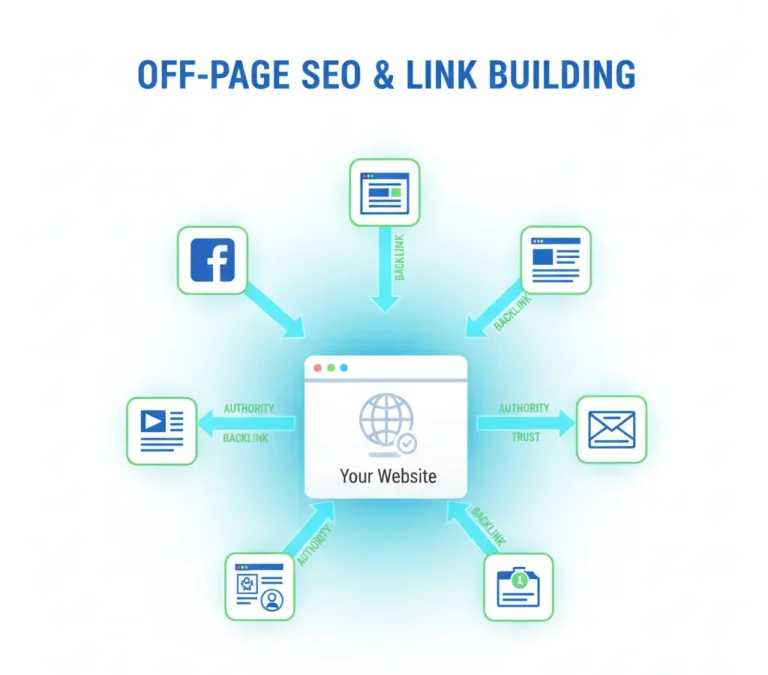
How Do Backlinks Affect Your Website’s Ranking?
One of the most important elements in establishing your website’s search engine ranking is backlinks. When a respectable website connects to your material, it tells search engines like Google that your website is reliable, authoritative, and pertinent. More high-quality backlinks increase your chances of ranking for competitive keywords.
Here’s how backlinks impact your rankings:
- Authority Boost: Backlinks from authoritative websites increase your site’s credibility in the eyes of search engines.
- Improved Search Visibility: High-quality backlinks help your pages appear on the first page of search results, driving more organic traffic.
- Faster Indexing: Backlinks from popular websites help search engines discover your content faster.
- Referral Traffic: Beyond SEO, backlinks can bring direct visitors from other websites interested in your content.
It’s important to prioritize quality over quantity—a single link from a high-authority site is typically worth more than hundreds from low-quality sites. When combined with a strong social media presence, backlinks can greatly improve your website’s exposure, engagement, and overall SEO performance.
Types of Backlinks: Dofollow vs. Nofollow Links in Off-Page SEO
Backlinks are an important part of off-page SEO, but not all links are made equal. Understanding the difference between dofollow and nofollow links might help you design a more effective backlink strategy.
Dofollow Links
- These are standard links that pass SEO value (link juice) from the linking website to your site.
- They help improve your domain authority and search engine rankings.
Example: When a high-authority blog links to your article without any special tag, it’s a dofollow link.
Nofollow Links
- These links include a special tag that tells search engines not to pass SEO value.
- While they don’t directly boost rankings, they can still drive referral traffic and increase your brand’s visibility.
Example: Links in blog comments, forums, or some social media platforms are often nofollow.
For a successful off-page SEO strategy, aim for a natural blend of dofollow and nofollow links. Dofollow links improve your results, whereas nofollow links assist you in gaining traffic, exposure, and creating relationships in your niche.
What is a Quality Backlink, and How Do You Get One?
A link pointing to your website from a respectable, authoritative, and pertinent domain is called a quality backlink. Unlike low-quality links from spammy or irrelevant websites, quality backlinks raise your search engine rankings, increase domain authority, and drive targeted traffic.
Characteristics of a Quality Backlink:
- Authority: Links from well-established sites with high domain authority carry more weight.
- Relevance: Links from websites related to your niche or industry are more valuable.
- Trustworthiness: Avoid spammy or suspicious sites; links from trusted sources matter most.
- Natural Placement: Links embedded naturally within content are more effective than those in footers or sidebars.
- Traffic Potential: Backlinks that drive real users to your site are highly valuable.
How to Get Quality Backlinks:
- Create High-Quality Content: Valuable, informative, and shareable content naturally attracts backlinks.
- Guest Blogging: Contribute articles to authoritative websites in your industry with a link back to your site.
- Build Relationships: Network with bloggers, journalists, and influencers to earn mentions and links.
- Leverage Social Media: Share content on social platforms to increase visibility and the likelihood of being linked.
- Use Directories & Listings: Submit your site to reputable business directories relevant to your niche.
Final Thoughts
Effective link building is a key component of off-page SEO, as it helps your website develop authority, enhance search engine rankings, and attract relevant traffic. Businesses may establish a strong online presence that stands out in today’s competitive digital market by concentrating on high-quality backlinks, interesting content, and smart outreach.
For those looking to maximize their SEO efforts, collaborating with a reliable SEO agency in Thodupuzha Kerala, like The Leeway Media, can make a major difference. With an emphasis on sustainable growth, tested tactics, and professional advice, The Leeway Media assists companies in developing strong backlink profiles and achieving long-term online success.